
Leadership Theories: What I've Learned
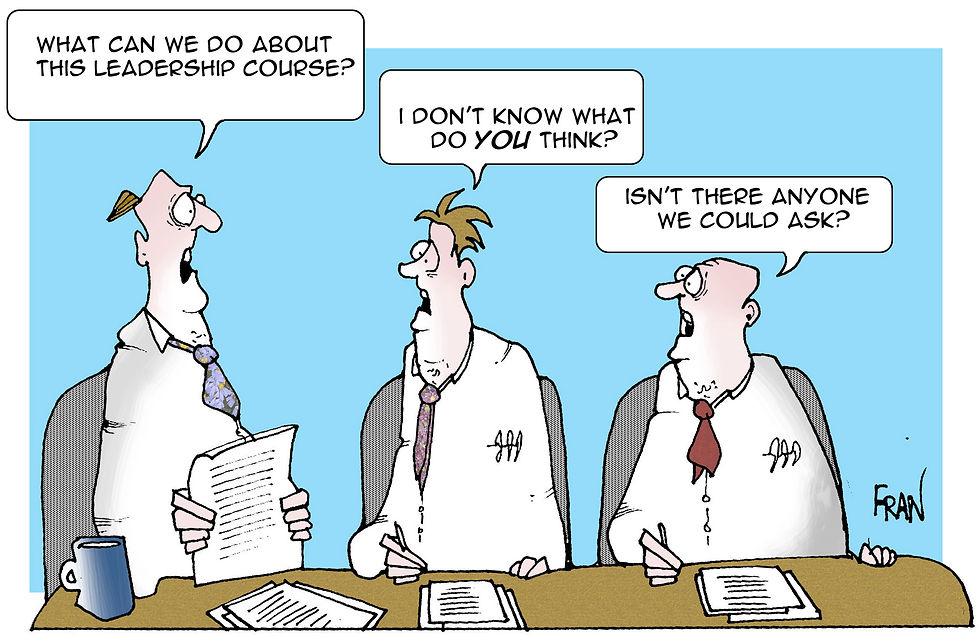
Over the past 7 weeks, we have discussed a variety of different leadership theories, each with their own idea of what makes a good leader. The Great Man theory suggests that great leaders are (mostly men) born as leaders. This leadership is passed down from generation to generation, for example with royalty. People who possess these traits are predestined to be great leaders. These traits include drive, leadership, motivation, honesty and integrity, self-confidence, cognitive ability, and knowledge of the business. The biggest drawback to this theory is that it does not account for the idea that these traits can be learned, that they don’t necessarily need to be “bred” into someone for them to be a good leader. Behavior based leadership defines a leader more so by how they behave ad their actions rather than the traits they possess. One of the theories encompassed in behavior based leadership is People-oriented vs. Task-oriented leaders. Task-oriented leaders are focused on making sure that the day-to-day tasks get completed and followers clearly understand their role in getting these tasks accomplished. People-oriented leaders focus on the relationship they have with their followers as opposed to simply making sure a task gets accomplished. Similar to this, and also included in behavior based leadership, is Theory XY. Theory X assumes that employees dislike work, lack ambition, avoid responsibility, and must be directed and coerced to perform. Theory Y assumes that employees like work, seek responsibility, are capable of making decisions, and exercise self-direction and self-control when committed to a goal. Theory X leaders are more likely to engage in task-oriented behaviors, and Theory Y leaders are more likely to engage in people-oriented behaviors.
The one major problem with all of these theories is that they do not account for the situation. The theories we discussed in the second part of the semester started to remedy this. The Contingency Theory introduced Situational Leadership. This is largely based around Blanchard’s Leadership Model that shows there are 4 approaches that leaders can take depending on the nature of the situation and the competence and commitment of the followers. The four styles that Blanchard outlines are Directing, Coaching, Supporting, and Delegating (in order from most to least directive). This model can be difficult for leaders to follow because they must focus on the situation and their followers more than just their own abilities.
Next we looked at Transactional and Transformational Leadership. In Transactional leadership, the role of supervision, organization structure, and group performance is crucial. Transactional leaders are largely focused on the day-to-day operations of the company and rely on the use of rewards and punishments to motivate employees. In contrast, Transformational leadership goes beyond the day-to-day operations and focuses more on creating a strategy to take the company to the next level of success. Instead of rewards and punishments, transformational leaders set goals to push their followers to perform better. Leaders build confidence and earn the trust of their followers to help them grow personally and professionally, and give them the freedom to solve problems on their own.
Lastly, we looked at Contemporary leadership theories. There are quite a few, but the one I related to the most was Authentic Leadership. Authentic Leadership is not focused on how you act, but more being true to who you are and utilizing your strengths to make you a better leader. Authentic leaders stay true to their values and ideals in every decision they make. I had been trying to find a leadership theory that really matched the way I find myself leading, and while some of the other theories had pieces that matched my own style, there seemed to be something missing. It wasn’t until I came across Authentic Leadership that I really felt that I had found a style that accurately described the way I like to lead.
Throughout this course, I have learned that while I relate more to the relations-based leadership theories, that’s really only because something I value is making people happy. I do not hide my motivations or reasons behind doing things a certain way, and I make sure that I stay true to my values when I am in a leadership position. I also tend to respond better to leaders that I have had that have exhibited these authentic leadership behaviors. I generally don’t appreciate it when I feel like someone is being “fake” or just saying or doing something because they think it’s easier or what everyone else would want them to do. Knowing this, I can create a strategy for the future and make sure that I do not stray from being my genuine self no matter what the situation is.
I also learned that a lot of what shapes the way I lead is my family. From the way they raised me, to wanting to make them proud and set a good example for my younger sisters now, my family influences a lot of the reason behind my actions. I hadn’t really considered this before and it wasn’t until I looked at the Authentic Leadership style and started to decipher my motivations for doing things.
I think the biggest thing I learned about leadership theory as a whole is that there is no “right” answer. Each person interprets leadership differently depending on how they were raised, the people around them, and their own experiences. And just because someone does it one way, doesn’t mean that a different style would also work in that situation. However, I do think that it is important to take into account all factors (the leader, the situation, and the followers) when discussing leadership theory. Any one of those things can affect how effective a leadership style is. This is part of why there is no one leadership style that works for everyone or every position. Leadership is a complicated concept and there is no easy answer. Everyone needs to decide for themselves which leadership style is going to work best for them.


Comments